Building a Trade Show Strategy for Niche B2B Industries: The Small-Pond, Big-Impact Playbook
Let’s be honest. Walking onto a massive trade show floor for a broad industry like “tech” or “manufacturing” can feel like being thrown into the ocean. It’s overwhelming, noisy, and frankly, a bit impersonal. But a niche B2B trade show? That’s a different story. It’s more like a curated, high-level mastermind session. The audience is specific, the conversations are deep, and the stakes for making a genuine connection are incredibly high.
That’s why your strategy can’t just be a scaled-down version of a generic plan. It needs to be surgical. You’re not casting a wide net; you’re fly-fishing in a precise stream. Here’s the deal: we’re going to break down how to build a trade show strategy that works for specialized sectors—think industrial coatings, forensic accounting software, or precision dairy equipment.
Why Niche Shows Demand a Different Mindset
First, you have to shift your thinking. In a niche industry, everyone knows everyone. Reputation is everything. A misstep isn’t just a bad day; it echoes. Conversely, a standout performance can cement your authority for years. The goals here lean less toward raw lead quantity and more toward relationship density and thought leadership.
Your targets are often seasoned experts, not casual browsers. They have very specific pain points—ones that broad-spectrum solutions just gloss over. Your strategy must speak directly to those nuanced challenges.
Pre-Show: The Deep Dive That Makes All the Difference
Okay, let’s dive in. Success is won before the doors even open. For niche B2B trade show planning, your pre-game work is non-negotiable.
Research is Your Superpower. Don’t just know the show; know the ecosystem. Who are the 10 most important people attending? What are the unspoken industry tensions right now? Is there a new regulation, a supply chain hiccup, or a technological shift causing headaches? Use this intel to craft messaging that sounds less like a sales pitch and more like a shared solution.
Hyper-Targeted Outreach. Blast emails are a death sentence. Instead, personalize. Reference a prospect’s recent project, a blog post they wrote, or a challenge unique to their sub-segment. The goal isn’t just to get them to your booth; it’s to start a valuable conversation that simply continues on the show floor. You know, like picking up a chat with an old colleague.
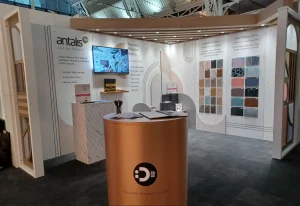
Booth Design That Talks Tech (or Timber, or Turbines). Your booth shouldn’t scream “corporate.” It should whisper “expert.” Ditch the generic graphics. Use detailed case studies, component cutaways, or live data feeds that only an insider would truly appreciate. The vibe should be a consultation hub, not a carnival booth.
The On-Show Playbook: Quality Over Everything
You’re here. The show is live. In this intimate setting, every interaction weighs a ton.
Staff for Depth, Not Just Smiles. Send your best technical minds and problem-solvers, not just your extroverted sales team. Conversations will quickly go beyond features into application specifics. Your people need to be credible peers. And honestly, they should be encouraged to listen more than they talk.
Ditch the Gimmicky Giveaways. A branded stress ball is pointless. Think like your attendee. What’s a high-value, industry-specific tool? A detailed whitepaper on compliance changes, a calibrated measurement gauge, or access to a proprietary software calculator for a week. Something that provides real utility and reminds them of your expertise long after the show.
Here’s a quick comparison of generic vs. niche engagement tactics:
| Generic Show Tactic | Niche Show Adaptation |
| Scan badges for a prize draw | Schedule a 15-minute technical audit or consultation |
| Hand out glossy brochures | Provide a USB drive with detailed spec sheets, CAD files, and test results |
| Demo the product’s main features | Demo how it solves “Problem X” that was just discussed in the keynote speech |
The Power of the “Second Location”
A pro tip? Don’t confine all your networking to the convention center. In a niche industry, the best deals and partnerships are often forged in quieter settings. Organize a small, invite-only dinner at a great local restaurant. Host a breakfast roundtable on a pressing topic. These off-floor events feel exclusive and foster the kind of trust that a crowded aisle never can.
Post-Show: Where the Real ROI is Nurtured
The show ends, and the real work begins. Your follow-up is the most critical part of your entire trade show strategy for niche markets.
Segment Your Leads with Surgical Precision. Categorize them beyond “hot/warm/cold.” Think: “Needs spec review,” “Interested in custom fabrication,” “Researching for 2025 budget.” This allows for hyper-relevant follow-up.
Reference the Conversation. Your first email should never start with “It was great meeting you.” Instead, try: “Following up on our discussion about the viscosity challenges you’re seeing with the new polymer blend…” This instantly jogs their memory and proves you were engaged.
Provide Value, Immediately. Attach that article you mentioned. Connect them with that engineer from your team. Send the link to the compliance document. Become a resource first, a vendor second. This builds the know-like-trust factor that niche industries thrive on.
A Final Thought: It’s a Long Game Played in a Small Town
Building a winning trade show strategy in a niche B2B industry isn’t about the flashy launch or the quick win. It’s a long-term investment in your reputation within a tight-knit community. It’s about showing up, consistently, as a knowledgeable and valuable player. One who listens, solves, and contributes to the industry’s dialogue—not just profits from it.
The metrics of success change. Sure, track leads. But also track the depth of conversations, the invitations to speak on panels, the quality of partnership discussions initiated. In this small pond, the ripples you create are everything. Make them count.